Starting your fitness journey can feel exciting and overwhelming at the same time. Many beginners walk into a gym without knowing where to start, what exercises to perform, or how often they should train. The good news is that you don’t need years of experience to build muscle, improve your health, and become stronger.
A well-designed Beginner Gym Workout Plan helps you develop confidence, improve your fitness level, and avoid common mistakes that often lead to injuries or frustration. Whether your goal is to gain muscle, lose fat, improve endurance, or simply become healthier, following a structured routine is one of the smartest decisions you can make.
This guide explains everything you need to know, from preparing for your first workout to following an effective weekly routine. By the end of this article, you’ll have a clear roadmap to begin your gym journey successfully.
Why Every Beginner Needs a Structured Gym Workout Plan

Walking into a gym without a plan often leads to random exercises, poor technique, and slow progress. A structured workout routine keeps you focused and ensures every workout contributes toward your fitness goals.
Some major advantages include:
- Better workout consistency
- Balanced muscle development
- Lower risk of injury
- Easier progress tracking
- Improved motivation
Instead of copying experienced lifters, beginners should master the basics first. Learning proper form with lighter weights builds a strong foundation that will support heavier lifting later.
Following a schedule also helps you understand when to increase weight, when to rest, and how different muscle groups work together.
Benefits of Strength Training for Beginners

Strength training offers much more than bigger muscles. It improves nearly every aspect of physical health.
Some of the biggest benefits include:
Builds Lean Muscle
Muscle tissue burns more calories than fat, helping improve your metabolism even while resting.
Increases Strength
Every week you’ll notice daily activities becoming easier, from carrying groceries to climbing stairs.
Improves Bone Health
Resistance training increases bone density, reducing the risk of osteoporosis later in life.
Enhances Mental Health
Exercise releases endorphins that help reduce stress, anxiety, and depression while improving confidence.
Supports Weight Loss
Combining strength training with proper nutrition helps preserve muscle while burning body fat.
Better Posture
Training your back, shoulders, and core strengthens muscles responsible for maintaining good posture.
Improves Athletic Performance
Whether you play sports or simply enjoy outdoor activities, stronger muscles improve balance, coordination, and endurance.
According to the American College of Sports Medicine (ACSM), adults should perform strength training exercises at least two days each week for optimal health.
Authority Resources
- American College of Sports Medicine: https://www.acsm.org
- World Health Organization Physical Activity Guidelines: https://www.who.int
Essential Gym Equipment Every Beginner Should Know

Walking into a commercial gym can be intimidating because there are dozens of different machines and equipment. Fortunately, beginners only need to understand a handful of essentials.
Dumbbells
Perfect for learning movement patterns while improving balance and coordination.
Examples:
- Dumbbell Bench Press
- Shoulder Press
- Goblet Squats
- Lunges
Barbells
Barbells allow you to perform compound movements that recruit multiple muscle groups simultaneously.
Examples include:
- Squats
- Deadlifts
- Bench Press
- Overhead Press
Cable Machines
Cable machines provide consistent resistance and are beginner-friendly because they improve stability.
Popular cable exercises include:
- Triceps Pushdown
- Lat Pulldown
- Cable Rows
- Face Pulls
Resistance Machines
Machines guide movement patterns, making them ideal for beginners learning exercise technique.
Useful machines:
- Leg Press
- Chest Press
- Leg Curl
- Leg Extension
- Seated Row
Cardio Equipment
Don’t ignore cardio.
Popular options include:
- Treadmill
- Exercise Bike
- Stair Climber
- Rowing Machine
- Elliptical Trainer
Aim for 15–20 minutes of moderate cardio after your workout or on rest days.
Preparing Before Your First Workout

Preparation is just as important as the workout itself. Spending a few minutes getting ready can improve performance and reduce the chance of injury.
Warm Up
Spend 5–10 minutes performing light cardio such as walking on a treadmill, cycling, or using an elliptical machine. Follow this with dynamic stretches like arm circles, leg swings, and bodyweight squats to prepare your muscles and joints.
Wear Comfortable Clothing
Choose breathable workout clothes and supportive athletic shoes that provide good grip and cushioning.
Stay Hydrated
Drink water before, during, and after your workout. Even mild dehydration can reduce performance and increase fatigue.
Focus on Proper Form
Start with lighter weights and learn the correct movement pattern before increasing resistance. Quality repetitions are more valuable than lifting heavy with poor technique.
Set Realistic Goals
Progress takes time. Aim to improve gradually by increasing repetitions, weight, or consistency each week rather than expecting dramatic changes overnight.
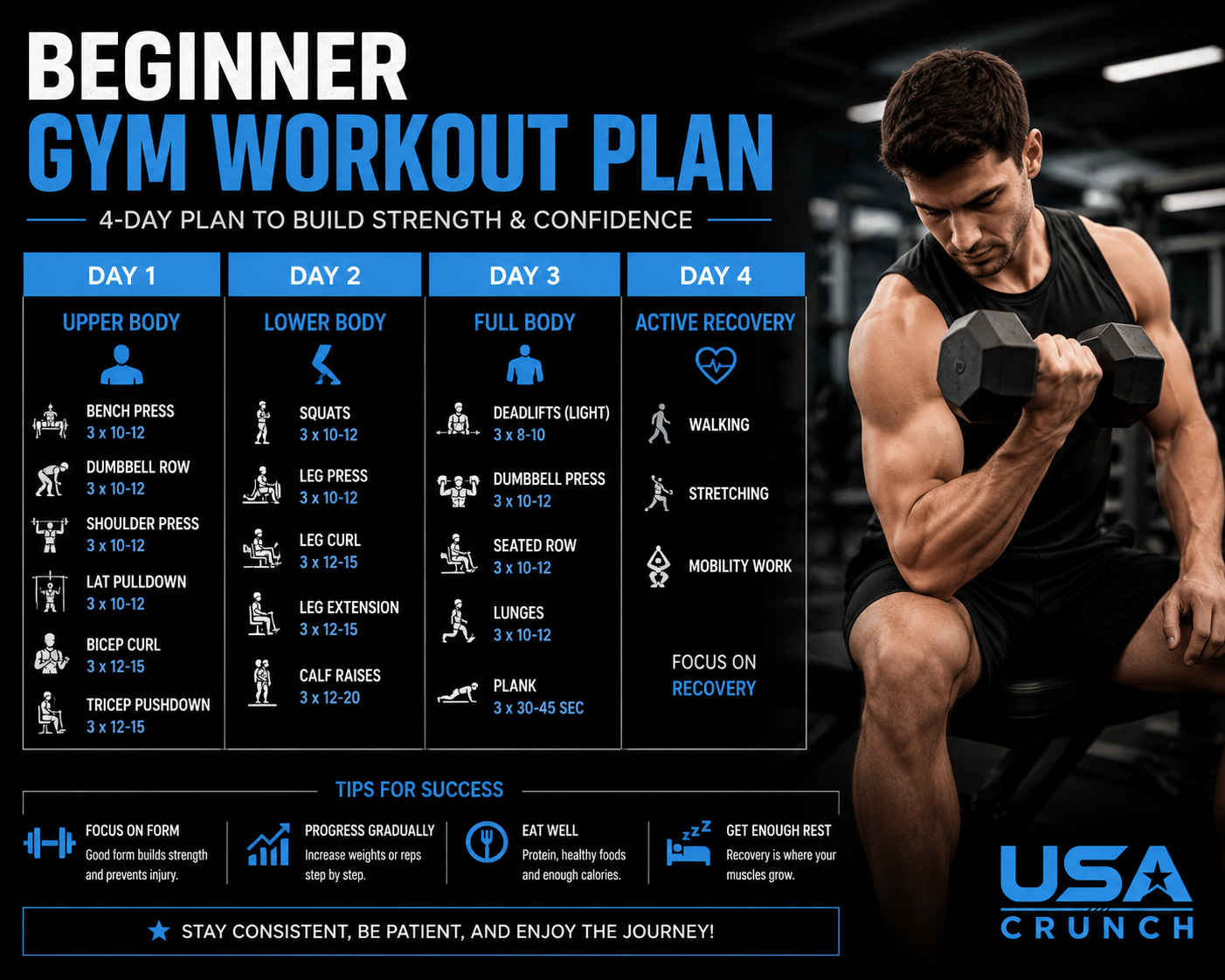
5-Day Beginner Gym Workout Plan

A structured weekly workout routine helps you build strength evenly while allowing enough time for recovery. Start with light to moderate weights and focus on proper technique.
Day 1 – Chest & Triceps
Warm-Up (5–10 Minutes)
- Brisk walk or light treadmill jog
- Arm circles and shoulder mobility exercises
| Exercise | Sets | Reps |
|---|---|---|
| Barbell Bench Press | 3 | 10–12 |
| Incline Dumbbell Press | 3 | 10 |
| Chest Press Machine | 3 | 12 |
| Triceps Pushdowns | 3 | 12 |
| Overhead Dumbbell Extension | 3 | 12 |
Finish with light stretching for your chest and arms.
Day 2 – Back & Biceps

| Exercise | Sets | Reps |
|---|---|---|
| Lat Pulldown | 3 | 10–12 |
| Seated Cable Row | 3 | 10 |
| Dumbbell Row | 3 | 10 |
| Barbell Curl | 3 | 12 |
| Hammer Curl | 3 | 12 |
Remember to squeeze your shoulder blades together during pulling exercises to maximize muscle activation.
Day 3 – Leg Day

Never skip leg day. Strong legs improve balance, athletic performance, and overall strength.
| Exercise | Sets | Reps |
|---|---|---|
| Goblet Squats | 3 | 12 |
| Leg Press | 3 | 12 |
| Romanian Deadlift | 3 | 10 |
| Walking Lunges | 3 | 10 Each Leg |
| Standing Calf Raises | 3 | 15 |
Stretch your hamstrings, quadriceps, and calves after finishing your workout.
Day 4 – Shoulders & Core

| Exercise | Sets | Reps |
|---|---|---|
| Dumbbell Shoulder Press | 3 | 10 |
| Lateral Raises | 3 | 12 |
| Rear Delt Fly | 3 | 12 |
| Plank | 3 | 30–60 Seconds |
| Bicycle Crunches | 3 | 20 |
A strong core improves posture, stability, and performance in nearly every exercise.
Day 5 – Full Body Workout

| Exercise | Sets | Reps |
|---|---|---|
| Bodyweight Squats | 3 | 15 |
| Push-Ups | 3 | 10–15 |
| Dumbbell Rows | 3 | 12 |
| Shoulder Press | 3 | 10 |
| Plank | 3 | 45 Seconds |
This session reinforces movement patterns while improving overall conditioning.
Common Beginner Mistakes

Many beginners make mistakes that slow their progress. Avoid these common pitfalls:
- Lifting weights that are too heavy.
- Skipping warm-ups and cool-downs.
- Ignoring proper exercise form.
- Training every day without rest.
- Following advanced workouts too early.
- Eating too little protein.
- Comparing yourself to experienced lifters.
- Not tracking workouts or progress.
Consistency always beats intensity in the beginning.
Nutrition Tips for Building Strength

Exercise alone isn’t enough. Nutrition plays a vital role in muscle growth and recovery.
Prioritize Protein
Aim to include lean protein in every meal. Great options include:
- Chicken breast
- Fish
- Eggs
- Greek yogurt
- Cottage cheese
- Tofu
- Lentils
- Beans
Eat Complex Carbohydrates
Carbohydrates provide the energy needed for effective workouts.
Examples include:
- Brown rice
- Oats
- Sweet potatoes
- Whole-grain bread
- Quinoa
Include Healthy Fats
Healthy fats support hormone production and overall health.
Good choices include:
- Avocados
- Nuts
- Seeds
- Olive oil
- Peanut butter
Stay Hydrated
Drink water consistently throughout the day. Proper hydration improves strength, endurance, and recovery.
Recovery and Rest

Your muscles grow while you recover—not while you’re lifting.
For the best results:
- Sleep 7–9 hours every night.
- Take at least 1–2 rest days each week.
- Stretch after workouts.
- Consider light walking or cycling on recovery days.
- Listen to your body and avoid overtraining.
Recovery is just as important as your workouts.
How to Track Your Progress

Tracking progress helps you stay motivated and identify what’s working.
Keep a workout journal or app to record:
- Exercises completed
- Sets and repetitions
- Weight lifted
- Body weight
- Progress photos
- Energy levels
- Personal bests
Small improvements over time lead to significant long-term results.
Frequently Asked Questions (FAQs)
1. How many days should a beginner go to the gym?
Three to five days per week is ideal. It allows enough training while giving your body time to recover.
2. Should beginners do cardio every day?
No. Two to four moderate cardio sessions per week are sufficient for most beginners.
3. How long should a beginner workout last?
Aim for 45–60 minutes, including your warm-up and cool-down.
4. How long does it take to see results?
Many beginners notice improvements in strength and energy within 4–8 weeks, while visible body changes may take 8–12 weeks with consistent training and proper nutrition.
5. Can I build muscle without supplements?
Yes. A balanced diet rich in protein, carbohydrates, healthy fats, vitamins, and minerals can support muscle growth. Supplements are optional and should not replace nutritious meals.
6. Is it okay to feel sore after working out?
Mild muscle soreness is common, especially when starting a new program. However, severe pain or joint discomfort may indicate improper form or overtraining and should not be ignored.
Conclusion:
A Beginner Gym Workout Plan is one of the most effective ways to build strength, improve fitness, and establish healthy habits that last a lifetime. By following a structured routine, focusing on proper form, eating a balanced diet, and allowing enough time for recovery, you’ll set yourself up for steady and sustainable progress.
Remember that fitness is a journey, not a race. Celebrate small milestones, stay consistent with your workouts, and don’t be discouraged by occasional setbacks. Over time, the effort you invest today will lead to increased strength, better health, and greater confidence both inside and outside the gym.
Whether your goal is to gain muscle, lose body fat, or simply feel stronger in your daily life, this beginner-friendly plan provides a solid foundation. Stick with it, track your progress, and continue challenging yourself as you grow stronger.