
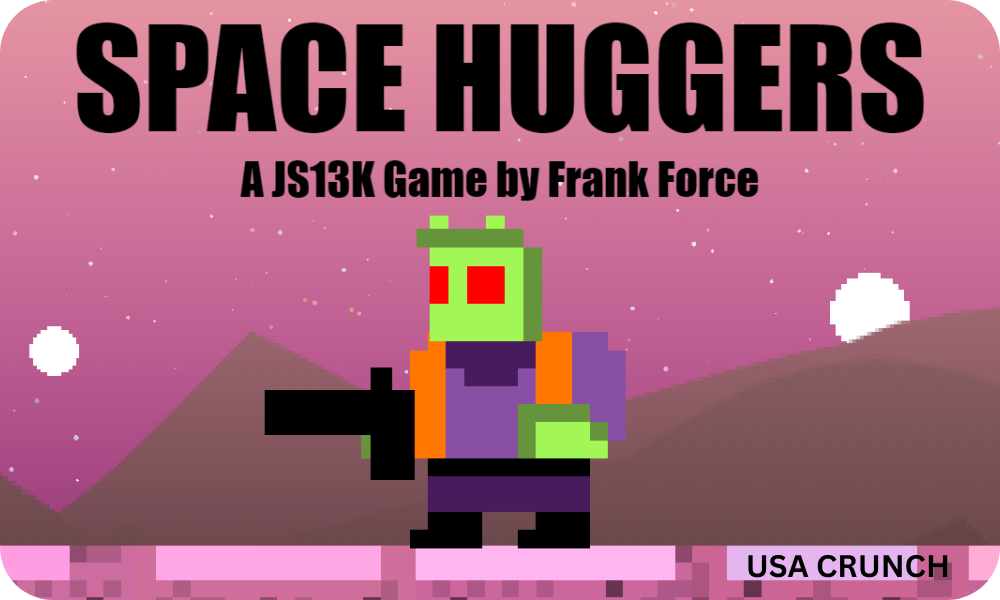
Space Huggers is a fast-paced 2D action platformer that combines arcade-style shooting mechanics with procedural level generation and cooperative gameplay features. Developed as an independent title, the game has gained recognition for its fluid movement system, retro-inspired graphics, and challenging combat dynamics.
This article provides a detailed examination of Space Huggers including its gameplay mechanics, technical structure, level design, character abilities, progression systems, and strategic considerations. The objective is to offer a structured and authoritative resource for players, educators, and game design enthusiasts.
Core Concept and Gameplay Overview
Space Huggers centers on intense, side-scrolling combat in procedurally generated environments. Players control a character tasked with surviving waves of enemies across multiple stages, utilizing a diverse arsenal of weapons and tactical mobility.
The core gameplay loop consists of the following sequential phases:
The player enters a randomly generated level.
Enemies spawn dynamically throughout the environment.
The player eliminates hostile units while avoiding damage.
Power-ups and new weapons are collected to enhance survivability.
The level concludes once all objectives or enemy waves are cleared.
This loop is repeated across progressively difficult stages, creating a scaling challenge structure.
Game Mechanics and Player Controls
Movement mechanics in Space Huggers are engineered for responsiveness and precision. The character can perform:
Horizontal movement with variable speed control.
High-arc jumping for vertical navigation.
Wall climbing and wall jumping for advanced traversal.
Weapon switching in real time.
Combat mechanics are equally dynamic. Weapons feature distinct firing rates, recoil patterns, projectile speeds, and ammunition limitations. Mastery requires spatial awareness, timing precision, and resource management.
Collision detection is calibrated to maintain fairness. Hitboxes are clearly defined, reducing ambiguity during combat encounters.
Procedural Level Design
One of the defining features of Space Huggers is its procedural generation system. Rather than relying on static maps, the game constructs levels algorithmically. This design approach offers several advantages:
Enhanced replayability due to variable layouts.
Unpredictable enemy placement patterns.
Dynamic difficulty adaptation.
Procedural generation typically involves the following technical steps:
A base grid structure is generated.
Platform modules are inserted according to predefined constraints.
Spawn points for enemies and items are distributed algorithmically.
Environmental hazards are placed to increase complexity.
The result is a unique map configuration for each session.
Weapons and Power-Up Systems
The weapon system is diverse and integral to strategic depth. Players encounter firearms such as pistols, automatic rifles, shotguns, and explosive launchers. Each weapon has defined parameters including damage output, fire rate, reload time, and projectile dispersion.
Power-ups provide temporary or permanent enhancements. These may include increased health capacity, faster reload speed, damage amplification, or defensive shields.
Effective use of power-ups requires prioritization. For example, defensive boosts are essential in high-density enemy waves, while damage amplifiers are optimal for boss encounters.
Multiplayer and Cooperative Play
Space Huggers supports cooperative gameplay, enabling multiple players to engage simultaneously. Cooperative mechanics require coordinated movement, synchronized attacks, and strategic positioning.
In multiplayer mode, team-based tactics include:
Dividing map coverage zones.
Protecting teammates during reload phases.
Sharing weapon pickups strategically.
Cooperative play introduces additional layers of complexity, particularly when managing enemy flanking behaviors.
Difficulty Scaling and Progression
The difficulty progression in Space Huggers follows an incremental model. Enemy health, spawn frequency, and attack complexity increase as players advance.
The scaling system includes:
Higher enemy density.
Faster projectile speeds from opponents.
Introduction of specialized enemy types with unique abilities.
Players must adapt by refining movement efficiency and optimizing weapon selection.
Strategic Gameplay Recommendations
To maximize performance in Space Huggers, players should adhere to several structured strategies.
Maintain vertical mobility to avoid concentrated enemy fire.
Avoid stationary positioning during high-spawn intervals.
Prioritize elimination of ranged enemies before engaging melee units.
Monitor ammunition levels continuously to prevent vulnerability during reload cycles.
Advanced players often integrate wall climbing techniques into combat to create unpredictable attack angles.
Educational Value and Game Design Insights
From a game development perspective, Space Huggers offers valuable lessons in procedural design and mechanical balancing. It demonstrates how algorithmic level construction can maintain engagement without sacrificing playability.
The game also illustrates effective implementation of risk-reward systems. Weapon variety encourages experimentation, while escalating difficulty sustains long-term player investment.
Developers studying action platformers can analyze Space Huggers to understand:
Efficient hit detection calibration.
Adaptive enemy AI behavior patterns.
Minimalist yet functional visual design.
Frequently Asked Questions About Space Huggers
What type of game is Space Huggers?
Space Huggers is a 2D action platformer that emphasizes shooting mechanics, procedural levels, and fast-paced combat.
Is Space Huggers single-player or multiplayer?
The game supports both single-player and cooperative multiplayer modes, allowing individuals or teams to complete levels together.
How does procedural generation improve gameplay?
Procedural generation ensures that each level configuration differs from previous sessions. This variability increases replay value and requires adaptive strategies.
What skills are most important for success in Space Huggers?
Key skills include reaction time, spatial awareness, resource management, and advanced mobility techniques such as wall jumping.
Are there boss encounters in the game?
Certain stages introduce more resilient enemy types that function similarly to boss units, requiring focused firepower and coordinated movement.
Is Space Huggers suitable for beginners?
While accessible in its controls, the increasing difficulty curve may challenge inexperienced players. Gradual practice improves proficiency.
What distinguishes Space Huggers from other action platformers?
Its combination of procedural level generation, cooperative mechanics, and fluid mobility differentiates it from traditional fixed-map platform shooters.
Conclusion:
Space Huggers represents a well-structured example of modern indie game design within the action platformer genre. Its integration of procedural generation, diverse weapon systems, and cooperative gameplay mechanics creates a balanced and replayable experience.
Through disciplined movement control, strategic weapon management, and adaptive tactics, players can navigate increasingly complex environments. For educators and developers, the game serves as a practical model of scalable difficulty, system design coherence, and algorithmic map construction.
In summary, Space Huggers exemplifies how focused mechanical precision and thoughtful design architecture can produce a compelling and enduring gameplay experience.