
Lbs to Gallons conversion explained in simple steps. Learn formulas, tables, and practical tips to convert pounds to gallons for water, fuel, oils, and more.Understanding lbs to gallons conversion might seem tricky at first. After all, pounds measure weight while gallons measure volume. So how can you convert one into the other?
Well, the answer lies in density. Once you understand density, converting lbs to gallons becomes straightforward and surprisingly practical.
This knowledge helps in many real-life situations. For example:
-
Cooking and food preparation
-
Fuel measurement
-
Chemical storage
-
Agriculture
-
Industrial manufacturing
In fact, industries often rely on lbs to gallons conversion to manage liquids safely and efficiently.
In this guide, you’ll learn:
-
The science behind lbs to gallons calculations
-
Simple formulas anyone can use
-
Quick conversion tables
-
Real-world examples
-
Common mistakes to avoid
By the end, converting lbs to gallons will feel easy—even if you’re not a math expert.
Understanding the Basics of lbs to gallons Conversion
Before diving into formulas, we need to understand something important: pounds and gallons measure different things.
Pounds measure weight, while gallons measure volume. Because of that difference, converting lbs to gallons always requires knowing the density of the substance.
Let’s break it down step by step.
What Pounds Measure
A pound (lb) measures mass or weight.
In everyday life, we use pounds for things like:
-
Food ingredients
-
Body weight
-
Shipping packages
-
Raw materials
For liquids, pounds tell us how heavy the liquid is, not how much space it takes up.
For instance:
-
10 pounds of water
-
10 pounds of oil
-
10 pounds of honey
All weigh the same but take up different volumes.
That’s why lbs to gallons conversion isn’t a simple one-number formula.
What Gallons Measure
A gallon measures volume—the amount of space a liquid occupies.
In the United States:
-
1 gallon = 128 fluid ounces
-
1 gallon = 3.785 liters
Gallons are commonly used for:
-
Fuel
-
Milk
-
Water
-
Paint
-
Industrial liquids
When converting lbs to gallons, gallons tell us how much physical space the liquid takes up.
Why Density Matters
Density connects weight and volume.
Density = Weight ÷ Volume
Each liquid has a unique density.
Examples:
| Liquid | Approx Density |
|---|---|
| Water | 8.34 lbs per gallon |
| Gasoline | ~6.3 lbs per gallon |
| Milk | ~8.6 lbs per gallon |
| Vegetable oil | ~7.6 lbs per gallon |
Because density varies, lbs to gallons conversion depends on the liquid.
10 pounds of water ≠ 10 pounds of gasoline in gallons.
Understanding this simple concept unlocks accurate lbs to gallons calculations.
The Science Behind lbs to gallons Conversion
Now let’s dive deeper into the formula that makes lbs to gallons conversion possible.
The relationship between weight and volume comes from density.
Standard Density of Water
Water is often used as the reference liquid.
At room temperature:
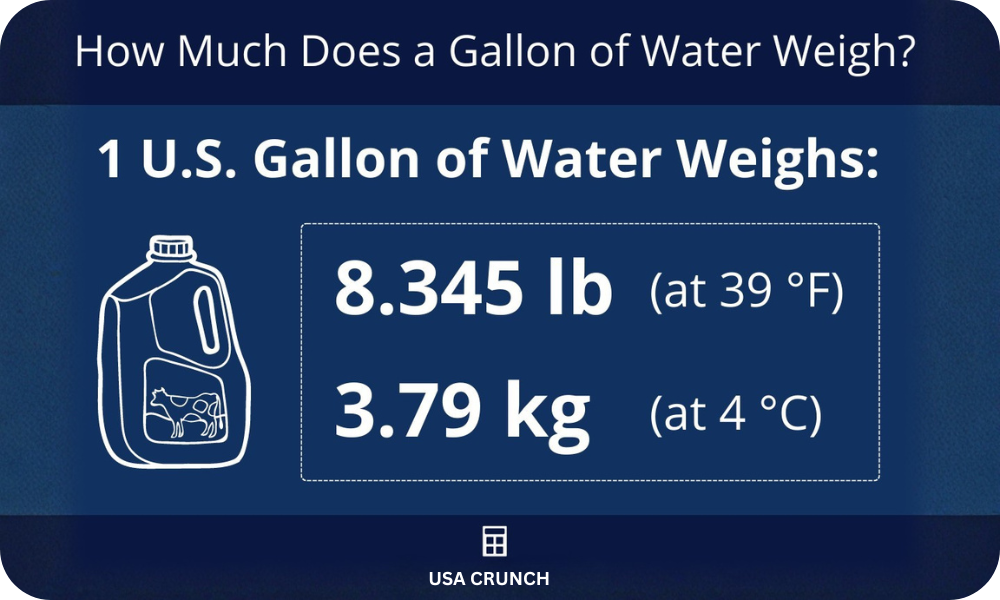
1 gallon of water weighs about 8.34 pounds
That means:
| Pounds | Gallons |
|---|---|
| 8.34 lbs | 1 gallon |
| 16.68 lbs | 2 gallons |
| 41.7 lbs | 5 gallons |
So if you’re converting lbs to gallons for water, the formula becomes very simple.
Example:
25 lbs ÷ 8.34 = 3.0 gallons (approx)
This makes water one of the easiest substances for lbs to gallons conversion.
Density Differences Between Liquids
However, other liquids behave differently.
Here are some examples.
| Liquid | Pounds per Gallon |
|---|---|
| Water | 8.34 |
| Gasoline | 6.3 |
| Diesel | 7.1 |
| Milk | 8.6 |
| Vegetable oil | 7.6 |
Let’s say you have 50 lbs of gasoline.
Calculation:
50 ÷ 6.3 ≈ 7.94 gallons
But 50 lbs of water equals:
50 ÷ 8.34 ≈ 5.99 gallons
See the difference?
That’s why knowing density is critical in lbs to gallons conversion.
For deeper scientific details about density, you can visit:
https://www.britannica.com/science/density
Conversion Formula Explained
Here’s the universal formula used in lbs to gallons calculations:
Gallons = Pounds ÷ Pounds per Gallon (Density)
Step-by-step process:
-
Identify the liquid
-
Find its density (lbs per gallon)
-
Divide the weight by density
Example:
Vegetable oil density ≈ 7.6 lbs/gal
40 lbs ÷ 7.6 = 5.26 gallons
Simple, right?
Once you memorize this formula, lbs to gallons conversion becomes quick and reliable.
Practical Methods to Convert lbs to gallons
Let’s explore practical ways to perform lbs to gallons conversion quickly.
Some methods are manual, while others use technology.
Method 1: Using the Density Formula
This is the most accurate approach.
Steps:
-
Determine the substance
-
Find density
-
Divide pounds by density
Example:
Liquid: Milk
Weight: 25 lbs
Density: 8.6 lbs/gal
Calculation:
25 ÷ 8.6 = 2.9 gallons
This method ensures precise lbs to gallons conversion.
Method 2: Conversion Tables
Tables are handy when speed matters.
Example lbs to gallons table for water:
| Pounds | Gallons |
|---|---|
| 8.34 | 1 |
| 16.68 | 2 |
| 25.02 | 3 |
| 33.36 | 4 |
| 41.7 | 5 |
| 83.4 | 10 |
Professionals often use tables for fast lbs to gallons estimates.
Method 3: Online Calculators
Digital calculators simplify everything.
Advantages:
-
Instant results
-
Reduced human error
-
Supports many liquids
Simply enter:
-
Pounds
-
Liquid type
Then the tool calculates lbs to gallons conversion automatically.
Many industrial engineers rely on these calculators daily.
Common lbs to gallons Conversions
Certain liquids appear frequently in lbs to gallons calculations.
Let’s explore them.
Water
Water conversions are the most common.
Key number:
1 gallon water = 8.34 lbs
Examples:
| Pounds | Gallons |
|---|---|
| 10 lbs | 1.2 gal |
| 25 lbs | 3.0 gal |
| 50 lbs | 6.0 gal |
| 100 lbs | 12.0 gal |
Because water is widely used, most lbs to gallons references start with this standard.
Gasoline
Gasoline is lighter than water.
Approximate density:
6.3 lbs per gallon
Examples:
| Pounds | Gallons |
|---|---|
| 10 lbs | 1.59 |
| 50 lbs | 7.94 |
| 100 lbs | 15.87 |
Fuel transport companies constantly perform lbs to gallons conversion to monitor fuel loads.
Cooking Oils
Cooking oils vary slightly but average:
7.6 lbs per gallon
Examples:
| Pounds | Gallons |
|---|---|
| 10 lbs | 1.32 |
| 25 lbs | 3.29 |
| 50 lbs | 6.58 |
Restaurants and food manufacturers often rely on lbs to gallons calculations when ordering bulk oils.
Real-World Applications of lbs to gallons Conversion
Understanding lbs to gallons isn’t just academic. It’s incredibly useful in real life.
Let’s explore where it matters most.
Cooking and Food Production
Professional kitchens often receive ingredients by weight.
However, recipes might require volume.
For example:
-
Syrup shipments in pounds
-
Oil measured in gallons
Chefs frequently convert lbs to gallons to maintain recipe accuracy.
Large food factories depend on these conversions daily.
Fuel and Automotive Industry
Fuel logistics rely heavily on lbs to gallons conversion.
Why?
Fuel shipments are often weighed but stored in tanks measured in gallons.
Applications include:
-
Fuel transport trucks
-
Aviation fueling
-
Oil refineries
Without accurate lbs to gallons calculations, fuel management would be chaotic.
Agriculture and Chemicals
Farmers frequently handle liquids like:
-
Fertilizers
-
Pesticides
-
Liquid nutrients
Suppliers may provide chemicals in pounds, while equipment tanks measure gallons.
Therefore, accurate lbs to gallons conversion ensures correct mixing ratios.
Incorrect conversions could damage crops.
Common Mistakes in lbs to gallons Conversion
Even experienced professionals sometimes make errors.
Here are common pitfalls.
1. Ignoring Density
The biggest mistake in lbs to gallons conversion is assuming all liquids behave like water.
They don’t.
Always check density.
2. Using Incorrect Density Values
Density changes slightly with temperature.
For most everyday conversions, approximate values work fine.
But industrial processes require precise numbers.
3. Mixing Metric and US Units
Some people accidentally mix:
-
Liters
-
Kilograms
-
Gallons
-
Pounds
Always ensure units match before doing lbs to gallons calculations.
FAQs About lbs to gallons
1. How many gallons is 1 lb?
It depends on the liquid.
For water:
1 lb ≈ 0.12 gallons
But for gasoline or oil, the value changes.
2. How many lbs are in a gallon of water?
Approximately 8.34 pounds.
This is the standard used in most lbs to gallons conversions.
3. Can you convert lbs to gallons without density?
No. Because pounds measure weight and gallons measure volume, density is required for accurate lbs to gallons conversion.
4. How many gallons is 50 lbs of water?
Calculation:
50 ÷ 8.34 = about 6 gallons
5. Why does gasoline convert differently?
Gasoline is lighter than water, so the lbs to gallons ratio is different.
Gasoline density is about 6.3 lbs per gallon.
6. Are lbs to gallons conversions exact?
They are approximations unless precise density and temperature values are used.
For everyday use, standard density values work perfectly.
Conclusion:
Understanding lbs to gallons conversion unlocks a powerful skill used in cooking, fuel management, agriculture, and manufacturing.
The key takeaway is simple:
Weight and volume are connected through density.
Once you know a liquid’s density, converting lbs to gallons becomes easy:
Gallons = Pounds ÷ Density
By using formulas, tables, or online calculators, you can perform lbs to gallons conversions quickly and accurately.