
Emergency Landing Secrets: 9 Critical Facts That Can Save Lives in the Sky
Emergency landing safety guide explaining emergency landing procedures, causes, pilot training, and survival strategies every passenger should know.Air travel is widely considered one of the safest ways to travel. However, even with advanced aviation technology and highly trained pilots, unusual situations can sometimes arise. In such cases, an emergency landing becomes a vital safety procedure designed to protect everyone on board.An emergency landing occurs when an aircraft must land sooner than planned because of an urgent problem. While the phrase may sound alarming, most emergency landing situations are handled safely thanks to rigorous training, well-designed aircraft systems, and coordinated aviation protocols.
Understanding how an emergency landing works can reduce anxiety and help passengers stay calm if such a situation ever arises.
What Is an Emergency Landing?
An emergency landing is an unplanned landing carried out due to a situation that threatens the safety of the aircraft, passengers, or crew. Pilots make the decision after assessing risks and determining that landing immediately is safer than continuing the flight.
There are several categories of emergency landing in aviation:
| Type | Description |
|---|---|
| Precautionary Landing | Landing performed as a safety measure before a situation worsens |
| Forced Landing | Occurs when the aircraft cannot remain airborne due to mechanical failure |
| Ditching | Emergency landing on water |
In most cases, the goal of an emergency landing is simple: get the aircraft safely on the ground as quickly as possible.
Common Situations That Require Emergency Landing
Although aviation safety is extremely high, certain conditions can require an emergency landing. Some of the most common triggers include:
-
Engine malfunction
-
Cabin pressure problems
-
Severe weather
-
Medical emergencies
-
Fuel concerns
-
Bird strikes
Pilots constantly monitor aircraft systems, so problems are usually detected early. Because of that, many emergency landing situations are precautionary rather than catastrophic.
Types of Emergency Landing
Different situations call for different emergency landing approaches.
Precautionary Landing
A precautionary emergency landing occurs when a pilot believes something might become dangerous later. For example, if a warning light indicates possible engine trouble, the pilot may choose the nearest airport.
Forced Landing
A forced emergency landing happens when the aircraft cannot continue flying. The pilot must land immediately, sometimes on a runway, field, or other open area.
Ditching
Ditching is a controlled emergency landing on water. Pilots train extensively for this scenario, even though it is extremely rare.
One famous example is the landing of US Airways Flight 1549 on the Hudson River in 2009, successfully handled by Chesley Sullenberger.
Causes of Emergency Landing in Aviation
Emergency landings do not happen randomly. Usually, a clear cause prompts the decision. Understanding these causes helps illustrate why aviation authorities place such a strong emphasis on prevention, monitoring, and training.
Mechanical Failure
Mechanical issues are one of the most well-known reasons for an emergency landing.
Aircraft contain thousands of complex components. Despite rigorous maintenance, mechanical systems can occasionally malfunction. Examples include:
-
Engine failure
-
Hydraulic system issues
-
Landing gear problems
-
Electrical faults
However, modern aircraft are designed with redundancy, meaning backup systems exist if the primary system fails.
For example, commercial aircraft often have multiple engines and duplicated control systems. Even if one fails, the aircraft can continue flying safely long enough to perform an emergency landing at the nearest suitable airport.
Severe Weather Conditions
Weather can change quickly during a flight. Pilots and air traffic controllers constantly track conditions using radar and satellite data.
Dangerous weather conditions that may lead to an emergency landing include:
-
Severe thunderstorms
-
Extreme turbulence
-
Lightning strikes
-
Ice buildup
-
Sudden wind shear
Although pilots normally avoid storms, sometimes unexpected weather requires an emergency landing to maintain safety.
Medical Emergencies on Board
Not all emergency landing situations involve the aircraft itself. Sometimes the problem is related to passengers.
A medical emergency—such as a heart attack, stroke, or severe allergic reaction—may require immediate medical treatment on the ground. In such cases, the captain may divert the aircraft and perform an emergency landing at the closest airport with medical facilities.
Cabin crews receive medical training and carry emergency equipment, including defibrillators and oxygen supplies.
Fuel Shortage or Contamination
Fuel issues can also lead to an emergency landing.
These situations are rare but may include:
-
Incorrect fuel calculations
-
Fuel leaks
-
Contaminated fuel
-
Unexpected headwinds increasing fuel consumption
Pilots monitor fuel levels continuously, and strict aviation regulations ensure multiple safety margins exist before fuel becomes critical.
Bird Strikes and External Hazards
Bird strikes occur when birds collide with aircraft during flight. Most of the time, they cause minor damage. However, if birds enter an engine, they can create serious problems.
This was the case in the famous Miracle on the Hudson, where birds disabled both engines of an Airbus aircraft shortly after takeoff.
External hazards may also include:
-
Runway debris
-
Drone interference
-
Volcanic ash clouds
In such circumstances, pilots may initiate an emergency landing as a precaution.
Emergency Landing Procedures Used by Pilots
Pilots do not improvise during emergencies. Instead, they follow strict procedures developed through decades of aviation experience.
Training for emergency landing scenarios begins early in a pilot’s career and continues throughout their professional life.
Communication with Air Traffic Control
The first step during an emergency landing is communication.
Pilots notify air traffic control using internationally recognized signals:
-
Mayday – used for life-threatening emergencies
-
Pan-Pan – used for urgent but non-life-threatening issues
Air traffic controllers immediately give priority to the aircraft and help coordinate the safest landing route.
Controllers may clear other aircraft from the airspace, prepare emergency crews, and guide pilots toward the nearest airport.
Aircraft Preparation for Landing
After declaring an emergency, pilots focus on preparing the aircraft.
Key steps include:
-
Reviewing emergency checklists
-
Configuring the aircraft for landing
-
Reducing speed and altitude
-
Activating safety systems
-
Evaluating landing options
Checklists are crucial because they ensure that no important steps are missed under pressure.
Modern cockpits also include digital warning systems that guide pilots through emergency landing procedures.
Passenger Safety Instructions
While pilots manage the aircraft, cabin crew prepare passengers.
Flight attendants typically instruct passengers to:
-
Fasten seat belts
-
Remove sharp objects
-
Secure loose items
-
Assume the brace position
Calm communication from cabin crew plays a vital role in keeping passengers relaxed during an emergency landing.
Final Approach and Touchdown
During the final stage of an emergency landing, pilots focus entirely on landing the aircraft safely.
This phase includes:
-
Stabilizing the aircraft
-
Aligning with the runway
-
Controlling speed and descent
-
Touchdown and braking
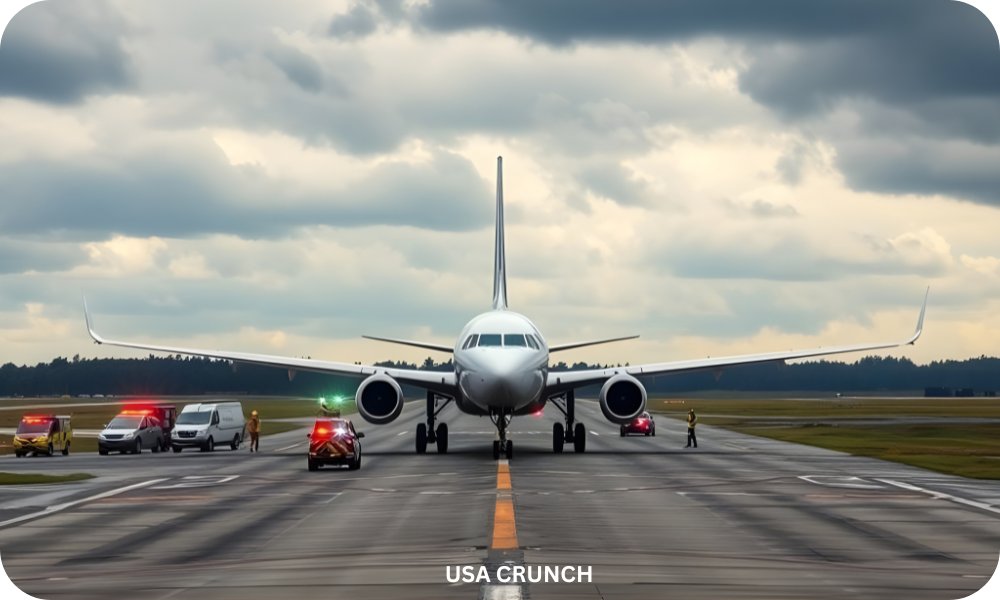
Emergency vehicles such as fire trucks and ambulances are usually positioned near the runway as a precaution.
Once the aircraft stops, crew members determine whether evacuation is necessary.
What Passengers Should Do During an Emergency Landing
For passengers, the most important rule during an emergency landing is simple: stay calm and follow instructions.
Even though the word “emergency” sounds frightening, trained professionals handle the situation every day.
Listen to Cabin Crew
Cabin crew members are trained specifically for emergency landing scenarios. They know exactly what to do and how to guide passengers.
Passengers should always:
-
Follow crew instructions immediately
-
Avoid panic or shouting
-
Help others if necessary
Correct Brace Position
The brace position protects the body from impact during an emergency landing.
Typical brace instructions include:
-
Lean forward
-
Place head against seat in front
-
Keep feet flat on the floor
-
Protect head with arms
This position reduces injury risk during sudden deceleration.
Evacuation After Landing
If evacuation becomes necessary, passengers must move quickly but carefully.
Important evacuation rules include:
-
Leave all luggage behind
-
Follow illuminated exit signs
-
Slide down evacuation slides
-
Move away from the aircraft
Aircraft evacuation systems are designed to empty a plane within 90 seconds, even in darkness.
Famous Emergency Landing Incidents
History provides powerful examples of successful emergency landing operations.
Miracle on the Hudson
One of the most remarkable emergency landing events occurred in 2009.
US Airways Flight 1549 struck a flock of birds shortly after takeoff from New York. Both engines failed, leaving the aircraft without power.
Captain Chesley Sullenberger safely landed the aircraft on the Hudson River.
All 155 passengers and crew survived, making it one of the most celebrated emergency landing stories in aviation history.
Lessons from Aviation History
Other emergency landing incidents have also helped improve aviation safety.
Each event provides valuable lessons that lead to:
-
improved pilot training
-
better aircraft design
-
stronger safety regulations
Organizations like the International Civil Aviation Organization analyze incidents worldwide to strengthen aviation standards.
For more aviation safety information, you can visit:
https://www.icao.int
How Aviation Technology Prevents Emergency Landings
Technology continues to reduce the likelihood of emergency landing situations.
Modern Aircraft Monitoring Systems
Aircraft today contain advanced monitoring systems that track engine performance, fuel use, and system health in real time.
If a problem develops, alerts appear instantly in the cockpit.
Pilot Simulation Training
Pilots train extensively in simulators that recreate emergency landing scenarios.
These simulations allow pilots to practice:
-
engine failures
-
severe weather
-
system malfunctions
By repeatedly practicing these situations, pilots develop quick decision-making skills.
Predictive Maintenance
Predictive maintenance uses data analysis to detect problems before they occur.
Sensors transmit aircraft data to engineers on the ground, who can identify potential issues long before they become dangerous.
This proactive approach greatly reduces the need for emergency landing procedures.
FAQs About Emergency Landing
1. How common is an emergency landing?
Emergency landings are extremely rare. Commercial aviation operates millions of flights each year, and only a tiny fraction require an emergency landing.
2. Are emergency landings dangerous?
Most emergency landing situations end safely. Pilots train extensively for these scenarios, and aircraft are designed to handle unexpected problems.
3. What should passengers do during an emergency landing?
Passengers should remain calm, follow cabin crew instructions, fasten seat belts, and adopt the brace position if instructed.
4. Can planes fly with one engine?
Yes. Most commercial aircraft can safely fly and land with one engine. Aircraft are designed with redundancy to handle such situations.
5. Do pilots practice emergency landings?
Absolutely. Pilots regularly train for emergency landing situations using flight simulators that recreate real-world scenarios.
6. What happens after an emergency landing?
After landing, emergency crews inspect the aircraft, passengers may be evacuated if necessary, and investigators analyze the situation to improve aviation safety.
Conclusion:
An emergency landing may sound alarming, but in reality it is a carefully planned safety procedure designed to protect passengers and crew. Thanks to advanced aircraft technology, strict maintenance standards, and highly trained pilots, most emergency landing situations are handled smoothly and safely.
Understanding how an emergency landing works can help travelers feel more confident when flying. The aviation industry constantly learns from experience, invests in new safety technologies, and trains professionals to respond effectively to unexpected challenges.
In short, the systems behind modern aviation ensure that—even in rare emergencies—the sky remains one of the safest places to travel.
Emergency Landing Secrets: 9 Critical Facts That Can Save Lives in the Sky Read More »