
Small Business Accountant: Save Time & Grow Your Business
Running a business requires more than selling products or delivering services. You must also manage expenses, prepare taxes, monitor cash flow, and maintain accurate financial records. These tasks can quickly become overwhelming, especially for entrepreneurs juggling multiple responsibilities.
A Small Business Accountant helps simplify your financial operations while giving you more time to focus on growing your company. From bookkeeping and payroll to tax planning and financial advice, a professional accountant ensures your business remains financially healthy and compliant with regulations.
Whether you’re launching a startup or managing an established company, hiring a qualified accountant can be one of the smartest investments you make
What Is a Small Business Accountant?
A Small Business Accountant is a financial professional who specializes in helping small businesses manage their finances effectively. Unlike general accountants, they understand the unique challenges that entrepreneurs face, including limited budgets, changing tax rules, and business growth.
Their primary responsibilities include:
- Maintaining accurate financial records
- Preparing financial statements
- Managing payroll
- Filing business taxes
- Creating budgets
- Monitoring cash flow
- Providing financial advice
By handling these essential tasks, accountants allow business owners to focus on serving customers and expanding their operations
Why Every Small Business Needs an Accountant
Many entrepreneurs attempt to handle accounting themselves during the early stages of business. While this may save money initially, it often leads to costly mistakes later.
Saves Valuable Time
Time is one of the most valuable resources for any business owner. Managing invoices, reconciling bank statements, and preparing financial reports can consume several hours every week.
A professional Small Business Accountant takes these responsibilities off your plate, allowing you to spend more time on sales, marketing, customer service, and business development
Improves Financial Accuracy
Manual bookkeeping often results in calculation errors, missing receipts, or duplicate entries. Even minor mistakes can affect your financial reports and tax filings.
An experienced accountant uses reliable accounting software and proven processes to maintain accurate records throughout the year
Ensures Tax Compliance
Tax laws frequently change, making compliance difficult for business owners without accounting expertise.
A Small Business Accountant keeps up with current tax regulations, helping you:
- File taxes correctly
- Avoid penalties
- Maximize deductions
- Meet filing deadlines
This proactive approach reduces financial risks while saving money
Key Services Offered by a Small Business Accountant
Professional accountants provide a wide range of financial services tailored to your business needs
Bookkeeping
Bookkeeping forms the foundation of every successful business.
It includes:
- Recording daily transactions
- Tracking expenses
- Managing invoices
- Reconciling bank accounts
- Maintaining financial records
Accurate bookkeeping provides reliable financial information for decision-making
Payroll Managemen
Paying employees accurately and on time is essential.
Payroll services typically include:
- Salary calculations
- Tax withholding
- Employee benefits
- Payroll reporting
- Direct deposits
This reduces administrative workload while ensuring compliance with employment regulations.
Tax Planning
Tax planning is much more than filing annual returns.
A skilled accountant helps you:
- Reduce tax liability legally
- Identify available deductions
- Estimate quarterly taxes
- Prepare for audits
- Develop long-term tax strategies
Proper planning can significantly improve your business’s profitability
Financial Reporting
Business decisions should always be based on reliable financial information.
Accountants prepare reports such as:
| Report | Purpose |
|---|---|
| Profit & Loss Statement | Shows income and expenses |
| Balance Sheet | Displays assets and liabilities |
| Cash Flow Statement | Tracks money entering and leaving the business |
| Budget Reports | Compare planned versus actual spending |
These reports help Benefits of Hiring a Small Business Accountant owners make informed decisions

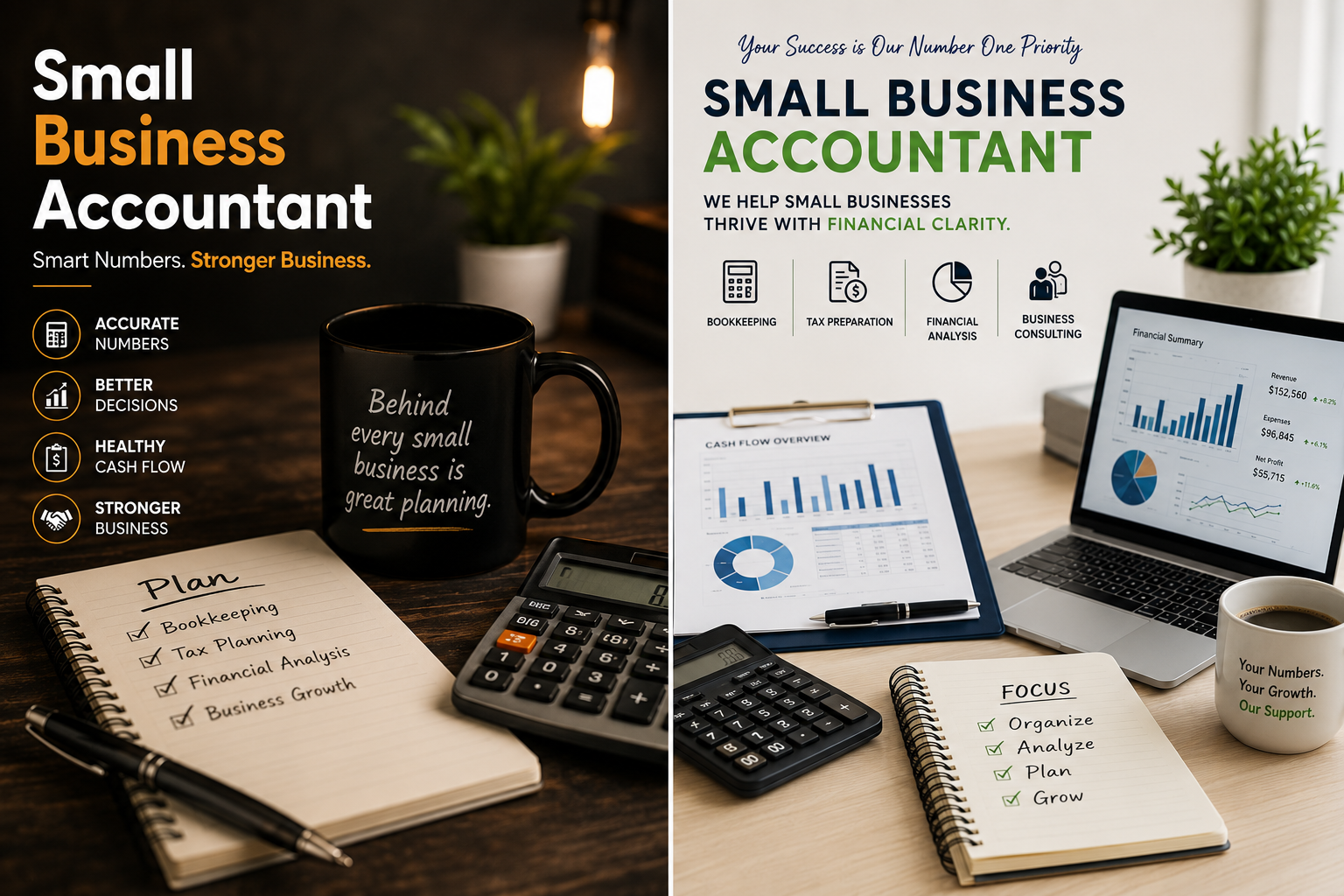
Benefits of Hiring a Small Business Accountant
Hiring a Small Business Accountant offers advantages beyond bookkeeping and tax preparation
Better Cash Flow Management
Cash flow problems are among the leading causes of business failure.
Accountants monitor incoming and outgoing funds, helping businesses maintain sufficient working capital and avoid financial shortages.
Better Business Decisions
Financial reports provide valuable insights into:
- Sales performance
- Profit margins
- Operating expenses
- Inventory costs
- Revenue trends
These insights support smarter business decisions.
Reduced Stress
Managing finances alone can be stressful, especially during tax season.
Knowing that a qualified accountant is handling your financial responsibilities provides peace of mind and reduces anxiety
Business Growth Support
As your business grows, financial management becomes increasingly complex.
A Small Business Accountant helps with:
- Business expansion
- Equipment purchases
- Loan applications
- Financial forecasting
- Investment planning
Their expertise supports sustainable long-term growth.
How to Choose the Right Small Business Accountant
Not every accountant is the right fit for your business.
Consider these factors before hiring
Experience
Choose someone with experience working with businesses similar to yours
Certifications
Look for recognized accounting qualifications and professional memberships
Technology
Modern accountants use cloud accounting software, making collaboration easier and improving efficiency
Your accountant should explain financial information in simple language and respond promptly to your questions.
Pricing
Understand whether they charge hourly, monthly, or fixed fees. Compare services rather than focusing solely on price

Common Mistakes Business Owners Make
Many businesses experience financial challenges because of avoidable mistakes.
Common examples include:
- Mixing personal and business finances
- Ignoring bookkeeping
- Missing tax deadlines
- Failing to track expenses
- Not creating a budget
- Waiting until tax season to organize records
Working with a Small Business Accountant helps prevent these issues before they become costly problems
Frequently Asked Questions (FAQs)
1. What services does a small business accountant provide?
A small business accountant provides essential financial services such as bookkeeping, tax preparation, financial reporting, budgeting, payroll management, and cash flow analysis. They help business owners maintain accurate records and make informed financial decisions for better growth.
2. How can a small business accountant help save time?
A small business accountant saves time by managing complex financial tasks, organizing records, preparing reports, and handling tax requirements. This allows business owners to focus more on daily operations, customer service, and business expansion instead of spending hours on accounting work.
3. Why is hiring a small business accountant important for growth?
A small business accountant helps identify financial opportunities, reduce unnecessary expenses, and create effective strategies for increasing profits. With accurate financial insights, business owners can make smarter decisions and plan for long-term success.
4. When should a small business hire an accountant?
A small business should consider hiring an accountant when financial tasks become difficult to manage, the company starts growing, tax responsibilities increase, or the owner needs professional financial advice. Early accounting support can help build a strong financial foundation.
5. How much does a small business accountant cost?
The cost of hiring a small business accountant depends on the services required, business size, and level of financial support needed. Some businesses need basic bookkeeping, while others require complete accounting solutions, tax planning, and financial consulting. Investing in an accountant can help save money by avoiding costly financial mistakes.
Conclusion:
Taking an entrepreneur break is not a sign of slowing down; it is a smart strategy for long-term success. Building a business requires creativity, energy, and clear decision-making, but constant pressure without proper rest can lead to stress, burnout, and poor choices. A well-planned break gives entrepreneurs the opportunity to recharge their minds, regain focus, and return with fresh ideas and stronger motivation.